Tuesday, May 19, 2009

Generative Creativity Redux: Color Science

The girls have a pair of orange tights that I can never figure out what to do with; for the most part, they only get used as part of the Velma Dinkley costume. Today I got in the mood for colored tights, and decided to pull them out.

Frustration ensued rapidly as combination after combination was dismissed. Then in a flash of inspiration, I got the idea to use a web site color scheme generator. Tools like these are designed to provide complementary color sets for layout and design jockeys that will be pleasing to the eye. After figuring out the hexadecimal code for the tights' specific shade of orange, I used the resultant palette as a guide for choosing pieces to go with them:


I was quite proud of the results, and eagerly shared them with a friend who is into fashion. She pointed me to a similar site, which after a very brief search turned up an almost identical palette to the one I'd used.

This sort of thing could really aid the fashion-impaired. A lot of people are afraid to try and match clothes because they don't feel competent at putting together pieces into a single outfit. By leaving the task up to the basic mathematical formulas of trichromacy, you can end up with really neat-looking combinations that will always look fresh. It would also be quite helpful for grassroots fashion designing sites like Spreadshirt, to ensure that your inks always match your fabrics. I believe I will be examining these and other related concepts in the near future.

Tuesday, May 5, 2009

The Deejay is a Necromancer

The sound is alive. Rhythms jump from speaker to speaker, ping-ponging back and forth in the stereo image; sweeping drones surround the space with a thick alpaca wool blanket of ambiance. All systems of alchemy are expressed through three elements: physical matter, kinetic motion, and transmission of information (Paracelsus called it the Tria Prima). The vinyl record releases the encoded information into the physical bodies of the dancers, and biological systems synchronize to the analog time signature like drum machines slaved to a MIDI clock, powered by the feed of electric energy transformed to beats and melodies. Music is magic. Music is life.

Silence is death; there's a reason why radio jockeys call it "dead air". The signal dissolves to static; no information is sent, no direction is received. Separated from their commanding groove, the dancers flail, unsure and confused, falling dead to the sides of the club. Scramble, shuffle, get the next record on -- just get anything on. Forget about the slipmat. Nevermind the beat-matching. Genre is irrelevant; the sound must go on.

The new power source is incompatible. The dancers are yet unsure, assimilated to the previous tempo and tone color; they try to match the new dynamic, but it fights them, forces them into new shapes and motions. Minions are you, says the change, zombies and vampires, beholden to the flesh and blood I allow you to feed on for survival. You will be what I tell you to be; you willingly surrendered your rights to identity the moment you stepped into this domain of undeath.

Move! Like marionettes, like machines, the dancers translate the information into stilted, sweeping gestures. No more are they resolved to the concerns of the living; only the music matters. Everything must be sacrificed to the almighty god of rhythm. Dead bodies swarm the floor, animated by the precise application of needles to surfaces in the grand tradition of hypodermic injection. Doctor Frankenstein would stand in awe.

The selector looks up from the booth and smiles. His spell has worked; his army of hollow statues, meticulously aligned to one another like miniature cogs in a stopwatch, pulsates with the dynamic of a beating heart. He crossfades to the next track, never letting the seams in his surgical techniques show. The mix will never end; the dancer will never die. Noel Coward finally has his answer: the show must go on because the show is all that there is.

Monday, March 30, 2009

The New Magic, or How I Learned To Stop Worrying About Capitalism And Embrace Being Rich

Anyone who has talked to me in the last year has undoubtedly heard me use the phrase "fuck you, I'm rich." While the inherent absurdity in the statement cannot be argued against, I am in fact dead serious about my belief that I am rich -- and like any good internet huckster, I'm now going to tell you the economic secrets I've unlocked for a one-time fee of only $19.95! No, just kidding, I'm not going to charge you. Why bother? I don't need your money -- I'm rich!

Perhaps not entirely surprisingly, our story starts back on, of all days, September 11th 2001, back when I was living in Newark, Delaware. After waking up at 2 PM and spending the next three hours attempting to figure out the new panicked world that had been thrust upon us all, I decided to take a walk for some perspective. I remember it being an unusually nice day, almost springlike. I took a walk to the 7Eleven on Elkton Road. There was a girl working there whom I'd had a short fling with, and she told me how she was scared for the future, and I hugged her and told her things were going to be okay.

Then, I bought a bag of Doritos -- the single most important bag of Doritos that has ever been purchased by anyone. Munching on the chips as I headed homeward, I found myself thinking: "wow, we're totally going to war soon, and war means food rations and saving your nylons and aluminum foil for the government. War means this might be the last bag of Doritos I ever eat in my life. I'd better savor them."

So I did. I savored every last bite of those chips, and as the days turned to weeks and the weeks to months, while everyone else kept an eye on Afghanistan and Pakistan and Iraq and Iran and Syria, I kept my eye on the availability of Doritos. My theory was: if there ever came a time that I could not easily acquire a bag of Doritos, I would know that the American paradigm had failed and I would then start to plan for alternatives. So long as I could get Doritos, though, I knew there was nothing to worry about, seeing as Doritos are the pinnacle of luxury spending -- a cheap, nutritionally suspect impulse buy that leaves one with nothing but trash when finished.

Thus the Doritos Index was born.

---

Fast forward to the present. I now work at a 7Eleven, this one in Tucson, Arizona. Every day I sell people booze, cigarettes, lottery tickets, and porn -- and of course, Doritos. We have eight flavors, ten if you count the newfangled Collisions bags as two separate flavors.

Collisions, for those who don't know, are a relatively new invention in Doritos technology. The idea is that you combine two complementary flavors of chips (for example, Buffalo Wing and Blue Cheese Dressing) in a single bag. Yes, dear friends, even with the economy looming on the edge of the abyss and two wars being raged in foreign countries, the Pepsi Corporation is committed to delivering you the absolute state of the art Doritos experience.

Jesus Christ, doesn't anyone else see what's wrong here? We are not in a depression! Depressions mean selling apples on the street and living in Hoovervilles! Look at your life: you're probably reading this on a supercomputer that is most likely sitting in your bedroom, or else a laptop in a coffee shop while you drink beverages cultivated from beans grown in Ethiopia. We have iPhones, iPods and Blackberrys. Porn is everywhere, and the most fashionable clothes are found in thrift stores for pennies on the dollar. Just today I heard that Apple is bringing Skype to the iPhone. That's right: we now have phones that emulate computers that emulate phones.

We live like kings. We should start acting like kings.

---

That's where the "fuck you, I'm rich" philosophy comes in.

First of all, before you can understand what it means to be rich, you need to understand exactly what money is. Money, in short, is a system of power transfer -- nothing more, nothing less. You put power into the system in the form of work, and you take power out of the system in the form of property (or, more accurately, property vouchers).

Put another way, think about how systems of magic work. Any Dungeons and Dragons geek knows that the basis of all magic in role playing games revolves around three attributes: material, gestural, and semantic. The material component can be just your own body, or it can involve reagents that need to be acquired such as runestones or gems or pelts of animals. The gestural component is the physical actions you perform: mixing potions, waving wands, or what have you. The semantic component is the language used to convey information, which can be spoken aloud or written in scrolls or sacred tomes. In any case, these three attributes always exist in magic: physical matter, kinetic action and transfer of information.

Now think about your job. You have to be present at a certain place in a certain time, whether it's showing up at an office or telecommuting from your home terminal, and you need various materials to do that job -- a laptop, a work smock, a boxcutter, whatever. You have to commit certain actions which constitute the physical work, whether it's moving a mouse in a CAD program or stocking boxes. You have to communicate with customers and with subordinates and managers and employers. Rapidly one can see how economics is itself a system of magic, because both systems employ material, gestural and semantic components to transfer power.

And after all of that, what do you get back? Scrolls! It may be in the form of a check or a direct deposit stub or as literal cash, but you always get a piece of paper detailing the exact amount of power you have generated, and the concurrent amount of power you are allowed to take out.

Seen in this light, capitalism is no moralistic issue, but rather an efficient and empowering tool. With money you can buy a car to travel farther and faster than you ever could on foot. You can buy a large screen television and view pictures from around the world or interact with entirely fantastic made-up environments. You can eat food that couldn't possibly be grown locally. You can refashion your own body with technological upgrades, and add makeup and costuming to turn you into another person entirely.

We live, in short, in the grandest and most rampant age of magic on record. The only thing that keeps us from seeing it is the belief that there is nobility in poverty. Nothing could be further from the truth.

---

Before you can shuck off those shackles of poor-think, though, there's another lesson to be learned. Now that you know what money is, you need to learn exactly how much of it you need.

As stated above, I sell a lot of lottery tickets to people. I find the lottery to be an asinine exercise, the very zenith of a mode of thinking that keeps people from realizing how rich they actually are. Particularly enraging are the folks who only buy tickets when the jackpot is above 100 million or so. I can just imagine the sympathy for the guy who accidentally buys a ticket and wins a mere ten million: "awwww, you poor, poor man. Tough luck, my friend."

One time I asked one of these folks: what's your plan for ten million dollars? I received an uninspired mishmash of half-answers: "pay off my bills, pay off my truck, maybe buy another truck, save some" -- all of which would represent perhaps $200,000 in funds, not even a single million. Eventually their meanderings ended in the inevitable "I don't know."

That, in a nutshell, is most people's first mistake about money: they don't have a clue about how much they actually need. Put another way, if you don't have a plan for what to do with ten million dollars -- or at least a vague idea -- then the exact amount of money you do not need is ten million and one dollars. A hundred million is nowhere on the discussion table.

And that's exactly why they remain poor. If you have no concept of how much you need, then by default you exist in a state of never having enough. The lottery is a prime example of how ridiculous a level this mode of thinking can be taken to: just what the Hell would you do if you actually won a hundred million dollars? Start your own space program? What could you ever possibly need that sheer amount of power for? By keeping people in a perpetual state of always thinking they need more money, those who have learned how to navigate the systems of power that the world has to offer can efficiently keep those people from ever becoming rich, no matter how much money they actually have.

Friends, there's a better way, and I'm going to tell it to you now.

---

The secret is to ACT LIKE YOU'RE RICH!

No matter how much money you have, no matter how many bills you have to pay, no matter how many hours you work, START THINKING LIKE YOU'RE RICH RIGHT NOW.

Say you have ten dollars in your pocket. If you use that ten dollars to pay off a fifty dollar cable bill, you are not rich. The cable company is not going to turn your cable back on for a partial payment; you have basically given them a free power transfer for no benefit to yourself.

BUT, if you use that ten dollars to buy ten one dollar burgers and eat them all in one sitting and then THROW UP because you ate too much, YOU SIR ARE RICH!

I'm going to now tell you about one of the richest people I know. He goes by the name Sky, and he's a customer at our store. He comes in and buys burritos and Mountain Dew Code Red Big Gulps with food stamps. He is homeless.

Once, Sky found a week long bus pass lying around at a bus terminal. He picked the pass up and rode the bus for a week. Let me explain that again: he rode the bus for a week just because he could. He had no destination in mind. He didn't use it to get from point a to point b. The destination was the bus itself. He decided that the best use of this bus pass was to actually use as much of it as possible, so he spent a week riding around all over the city, playing his PSP, and then getting off and trying out another bus route for a while. He did this for a whole week.

That action alone is far and away richer than most people I know that own their own houses! The bus pass was not a means to an end: it was the end itself. THAT is thinking like a rich person.

---

Now, before you start thinking that this is some sort of Ayn Rand uber-capitalism notion, let me state that nothing could be further from the "Fuck You, I'm Rich" philosophy. One of the truly rich things you can do with your money is GIVE IT AWAY. When you start thinking like a truly rich person, you will be amazed at how much compassion and altruism naturally come about in your life.

At its essence, the "Fuck You, I'm Rich" philosophy is almost an exploit of Buddhism. Think of it this way: if you always have enough money for what you need, then you have no attachment to any one thing you need. You can always just get another. Since you have no attachment to any one thing, then you have no attachment to anything. You are free to simply become action.

Viewed from this perspective, it is easy to see how a rich mindset naturally produces charity for others. If you're not worried about money, you may as well give it away! I've often found that the absolute richest things I can do are pay for a friend's meal or buy someone something they can't otherwise afford. One friend whom has taken this philosophy to heart noted: the net amount of wealth in the world increases ones own individual capacity to be rich. By giving to the poor you are actually increasing your own richness, since money is activated power transfer, and you are the one directing the power.

Sometimes I'll offer to pay more for something on principle alone. The ironic thing is, when I try to do this, I often get a discount! When people recognize that you are rich, they will bend over backward to get you the things you need. Here's true story that illustrates an interesting example of that: my domestic partner and I recently had to transfer her medications to a new pharmacy so that she could continue to get them by mail. We had to go out to the supermarket where the pharmacy was, and there was an issue with her medical discount card. The pharmacists basically treated us like lepers because they thought we were poor, due to the discount card not working.

After a few runarounds with the insurance company and the pharmacy I finally just said: "How much to pay for these in cash?"

"That's very expensive, sir," said the female pharmacist at the counter.

"That's not the question I asked you. How much?"

She rang them up and told me the total, which was in excess of $500. I said, "Fine, please fill these perscriptions, we'll be back to pick them up in about ten or fifteen minutes." Then we went back into the market and browsed while we waited.

Suddenly, a man in a lab coat came running -- yes, literally running -- up the aisle at us. "Hey, are you the folks that just filled these prescriptions?"

"Yes, that's us," I said.

"Well, I just thought you should know that we have a discount program of our own through the market. If you like I can get the paperwork started for you now while you wait!"

I blinked, looked at my partner, looked back at the pharmacist. "Yes," I said, "that would be fine." We then got a tremendous discount on the medicine, easily over half the cost, because the perception of us had radically changed once I revealed that the amount of money was not going to stop us from acquiring what we needed. Suddenly we were no longer poor people who couldn't afford the medicines; we were rich people who could afford whatever we damn well pleased, and as such, we deserved respect.

We did deserve respect, because all people do. The problem lies in that they usually don't respect themselves first. No more: now everyone, everywhere can act like they're rich.

---

So, Chisa, how can *I* start acting like I'm rich today?

The first thing you need to do is realize that any amount of money you have is power. The amount itself is meaningless; a penny or a dollar or a hundred dollars or a million dollars are all just levels of power transfer, but if you have any amount of money at all, you are in the power transfer system! You have magic in your pocket and it is up to you, and no one else, to decide how to use it.

The second thing you need to do is figure out what you want to really, truly do with your power. Maybe you want to be a rock star. Maybe you want to write a great novel. Maybe you want to be a lawyer and represent corporations. Maybe you want to design the fastest car ever, and then break the land speed record driving it. Maybe it's doing nothing at all and lying around on your fat ass playing video games! It doesn't matter; the point is figuring out what it is and understanding that the only thing keeping you from it is the amount of power transfer required to get to that goal.

The third thing you need to do is put your power into achieving the goal. If you need more power, acquire it by whatever means are available. Remember that you always have options because your power is yours, not someone else's. If you have to let a bill slide for two months to get yourself to a position you need to be in, then LET THAT FUCKER SLIDE.

I'm not saying you shouldn't pay your bills, mind you; one of the richest things you can possibly have is NO DEBT. I haven't had a credit card for my entire life. I do have a Visa debit card now, tied to my bank account, but if I overdraft it comes from my savings, not a credit card company. Think about that: I am so rich the overdraft protection for my bank account is my OTHER bank account.

What I am saying is that if you want to be truly rich, then your first and foremost focus should be getting the things done that you truly need to do. Another friend once noted: life gives us all homework assignments that have to be turned in before death. This essentially is the "Fuck You, I'm Rich" philosophy distilled to its purest form. Whether or not you believe that your life has meaning or reason or purpose, it does have a self-directed goal, even if that goal is "do as little as possible." It's your duty to see that goal reached, but you can't ever do that if your default mode of thinking is that you're too poor to accomplish anything.

So for Pete's sake, START ACTING RICH!
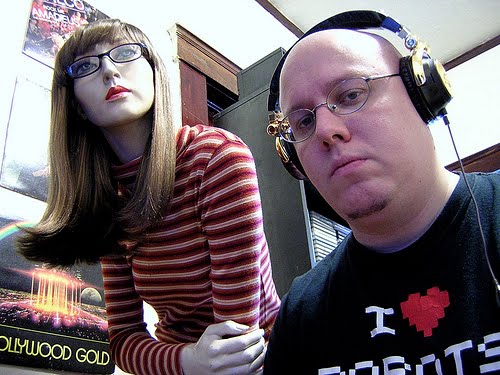
Friday, October 17, 2008

Sir Mix-A-Lot's "Baby Got Back," Translated for Literature Majors

I am fond of oversized hindquarters, and I am unable to falsify this information.
Neither may you fraternal acquaintances offer renouncement,
for when a young female enters, possessing a notably reduced midriff
and a posterior so rotund as to be forthright,
your male member becomes erect, and thusly, you desire to remove it from your trousers
due to the fact that you have become aware of the aforementioned plump dorsal section
which is immersed within a pair of denim dungarees.
I admit addiction to this situation, for I cannot avert my eyes.
Dear maiden, I desire to be close to you
so that I might capture your likeness on a photographic plate.
Compatriots of mine advise caution;
however, I find the derriere that is attached to you incredibly erotic.
O! Thee with the backside of velvety tegument,
do you indicate that you would enter my Mercedes?
Then I beseech: manipulate me to your own ends,
for I believe you to be superior to my usual hangers-on.
I have witnessed how she undulates;
a pox on courtship!
She perspires to a degree that soaks her vestments,
resembling, in her tenacity, a Chevrolet with forced-induction combustion.
I grow weary of periodicals
which report that planar backsides have become chic.
Approach any African male and inquire whether he agrees.
Verily, he will report the opposite.
I ask you, my comrades,
do the loves of your lives retain lipids within their haunches?
If so, you must implore them to agitate them,
for doing so will illustrate their wellness.
Indeed, my darling has a large keister.

Knight Grand Cross Whom Combines Frequently - Indeed, My Darling Has A Large Keister

Wednesday, August 13, 2008

Generative Creativity

I came up with a GREAT technique for naming characters:

1. Go to http://www.random.org/integers/ and generate 2 integers from 1 to 1000.
2. Go to http://names.mongabay.com/female_names.htm and use the first number for the first name (for girls; there's also a page for guys in the menubar).
3. Go to http://names.mongabay.com/most_common_surnames.htm and use the second number for the last name.

This can also be a good creative tool in general, for stimulating the imagination; generate a name, then come up with the persona based on it. Geoffrey Manning, for example, is a low-level sysadmin with dreams of one day becoming a star in the blogosphere, but this will never happen seeing as he only ever blogs about his cat's human-like qualities, his female acquaintances' cat-like qualities, and the fact that repeated consumptions of burritos continue in deference to his horrible bowel issues. He is played by Stephen Root, or possibly Jack Black if the director can get him to closely emulate "reserved".

Then there's Cathy Sexton, a tortured high school sophomore who carries a rather unfortunate surname in contrast to the fact that she is still a virgin. She wears thick-rimmed, leopard-print glasses, carries a My Little Pony backpack, and will be the victim of exactly one rape scene. Played by someone born no earlier than 1986 who is NOT Lindsey Lohan.

Dianna Ryan is a daytime soap opera actress with raven-black hair, a sort of semi-permanent sneer (even when she smiles; especially when she smiles), and a penchant for purses that cost more than her entire net worth.

Oscar Padilla: wildly eccentric millionaire, balding, harbors a deep desire to be the first man to walk on the surface of the sun.

And finally, Elsa Trevino... she's a hard one to pin down. Some days she's like a whisper on winds, carried farther down the lane than was ever intended, a secret on shivers that teases far more. Other days, she a fucking cunt. In any case, she works at a local independent record store, has more De La Soul albums than the artists themselves, and never wears shorter than a two-inch heel in any occasion.

Threading them all together, the soap opera star is totally whoring herself to the millionaire so that she'll get his money when he kicks the bucket. The sysadmin works somewhere within the millionaire's corporate hegemony, and dates the record clerk, who has the high schooler as a regular customer.

Beginnings of a story right there, from a mere ten random numbers. Solid.

UPDATE: our ever-selfless pal cxreg has cobbled together a wedge page to automate the process described in this post. I thank you from the bottom of my pancreas, cxreg, as do the newly-generated Cora Sanchez, Rod Lawson, Silas Drake and Janine Hammond.

Saturday, June 28, 2008

The Television Will Not Be Revolutionized


"I hate television. I hate it as much as peanuts. But I can't stop eating peanuts."
-- Orson Welles


While I was at Value Village a few days ago tracking down some costume pieces to use in a set of Scooby-Doo inspired mannequins photos, I stumbled across an old Gemini KM200 "rabbit-ears" antenna. I haven't watched television regularly for over a decade, due to a combination of factors: lack of decent programming, increasingly schizophrenic advertising, sporadic broadcast availability, a wide variety of optional media outlets (cable, satellite, DVD rentals, bittorrent). What was once the major technological method of information and entertainment acquisition has become increasingly sidelined, almost to the point of obsolescence.

The FCC apparently agrees; in less than a year (specifically, on February 17, 2009) analog television broadcasting will cease to exist. I find myself saddened by the end of this era; even though television and I parted ways over a decade ago, I have to admit that the boob tube has had a significant impact on my cultural identity. I cut my teeth on Star Blazers and Mister Roger's Neighborhood, ran home from elementary school for Pink Panther and Inspector Gadget, woke up early to catch Robotech before middle school, spent my lonesome preteen nights with Doctor Who and Monty Python, clung to The Real Ghostbusters and Teenage Mutant Ninja Turtles for support through boarding school, and took solace in Red Dwarf and Star Trek: Deep Space Nine during the madness years following graduation.

I decided to buy the antenna. My desktop has a capture card with a built-in tuner, which usually goes unused. Using a very simple adapter, I could hook the old dipole receiver into the cable-ready port on the back of my box. I would catalog this final year of television, writing down its memoirs before it passes into oblivion, like an old, dying parent in a nursing home.

---

The antenna is incongruous against the rest of the equipment on my desk: a huge metal sculpture reaching up to the sky like some abstract Rocky statue, praising the heavens and praying for the blessed signal to be bestowed. Behind it and off to the right sits the desktop's wifi-G adapter, whose own antenna, in contrast, is blue, plastic, and only three inches long. Its stubby transceiver, barely visible from the chair, looks like the smart kid in the back of the class raising his hand politely and patiently, while in front of him this drama queen of silver and height is flailing her arms for attention: I'm the Princess! Everyone look over here, I have something important to say! There's a sale at Macy's, half off blouses and skirts.

The first experiment was very rough. Tucson has a number of broadcast stations and television translators (lower-power relay stations which piggyback a larger station's signal onto another channel), but the capture card's auto-tuner could only find six stations with a decent amount of signal:

13 KOLD - CBS
16 KGUN - ABC (translator)
18 KTTU - MyTV
27 KUAS - PBS (translator)
29 KPCE - Daystar
40 KHRR - Telemundo

Nowhere to be found was the old standby NBC, nor any Fox or CW affiliates -- well, unless you count MyTV. I was unfamiliar with this network, so I did some research: when WB and UPN merged in 2006 to form CW, several UPN stations were lost to Fox. Fox turned these stations into a new network called MyNetworkTV (or MyTV for short), following on the coattails of their acquisition of the MySpace internet brand.

The other station I didn't recognize was Daystar, but it only took a single Google search to determine why: it's a Christian network. Easily the loudest and clearest signal of the bunch, Daystar was ironically ignored by my card's auto-tuner. I begrudgingly added it manually, resolving I could not be biased in my historical accounts.

I began flipping around the dial. At 11 AM on a Wednesday, the choices were:

- a paid Christian program
- another Christian program
- a soap opera
- another soap opera, in Spanish
- the news
- Barney and Friends

No reruns of McHale's Navy? No 321 Contact? No Press Your Luck? What sort of mad nightmare mediascape was this?

A couple of hours later, it wasn't any better. I checked the various networks' schedules for the rest of the evening, and then the rest of the week. What I found was a slew of ill-conceived reality shows, a smattering of sitcoms with only slightly more realistic premises, some paranoid doctor and crime dramas, and 'investigative' (read: exploitative) news programs.

I was stunned. I knew television had gotten bad (when that Lost crap is your biggest draw, you're clearly on the down stroke) but I never imagined that the horrors had sunk so miserably low. There were no stories, no narratives, no characters that you could learn to love or learn to hate. All that remained was a diorama of horrible fuckups: pedophiles on hidden cameras, washed-up celebrities forced to degrade themselves like heroin junkies for one more brief glimmer in the spotlight, asshole citizens assaulted by asshole criminals who get booked by asshole cops to be defended by asshole lawyers in front of asshole judges -- and then there's Flavor Flav.

Disgusted, I shut the damn thing off, and returned to watching Xvid rips of old Star Trek: The Next Generation episodes.

---

I walked home from the Friday graveyard shift listening to Boards of Canada on my Palm Tungsten C. The resonant chords and loping beats, like hip hop produced by Eeyore, complimented the early morning sunrise in the monsoon-soaked humidity.

It was Saturday morning; I entered my home, slung the backpack off, and sat down at the desktop. Saturday mornings had always been a joyous childhood time, even during the harshest points of my life. Adults, worked to exhaustion five days a week, slept in on Saturdays, which meant if you were enterprising and ninja-quiet, you could help yourself to a breakfast of cold pizza and while away the next few hours with the Shirt Tales, the Mighty Orbots and Kidd Video.

I fired up the capture card and ran the auto-tuner again. It deemed KXBA 58, a CW affiliate, was now worthy of signal recognition. It was 7 AM; time to watch cartoons. Surely that old stalwart bastion of childhood had not yet gone the way of the dodo?

Wrong again!

What I found in lieu of the Cosby Kids and Pee Wee's Playhouse was a batch of lame garbage: Disney's The Emperor's New School, Beakman's World, a rehashing of the Care Bears, some crap called Will and Dewitt -- and for some reason, they all had an "e/i" logo in the upper right hand corner.

"e/i" stands for "educational and informative", and was created out of the Children's Television Act of 1990. Networks are required to broadcast at least three hours of e/i children's programming per week, and virtually all of this falls in the slot previously used for Saturday morning cartoons. While I applaud the spirit of the initiative, hardly any of these shows could be considered to have even a remote educational value, unless they are intended for retarded children; of the samples I viewed, only Beakman's World seems to take the notion with any seriousness, but, to be blunt, it's really just a poor man's Bill Nye, who in turn is a poor man's Mr. Wizard, who in turn is a poor man's Julius Sumner Miller.

Surely this can't be all kids have to look forward to on the weekend? The whole point of showing cartoons on Saturday is because kids don't have school then -- you know, that place where they're supposed to get an education. I delved deeper into the Saturday programming:

- CBS's lineup has been reduced to a fairyland of unicorns and rainbows, with Strawberry Shortcake, an animated Sabrina the Teenage Witch, an adaptation of the Madeline children's book series, and something called Horseland which is even too god damned Takei for me to explain.

- ABC now relies almost entirely on live-action teen comedies like Hannah Montana, That's So Raven and The Suite Life of Zack & Cody. Only Power Rangers: Jungle Fury approaches anything resembling a classic Saturday morning cartoon, and frankly I was surprised that Americanized Super Sentai clones were still being produced.

- MyTV, owned by Fox, leaves the responsibility of programming the e/i block entirely to its affiliates.

- As for the CW, well... give credit where credit is due, I always say. They seem to be the final holdout of the old ways, with treasured friends like Spider-Man, Batman and Tom and Jerry gracing their 7-to-noon block -- ironic, considering they're one of the newest networks.

No wonder teenagers are so intolerable these days! If I'd had this tripe for my weekend breather as a child, I'd probably have turned into an douchebag, too. I remember crying like a baby when I discovered that Galaxy High School had gone off the air. If only I'd known then what I know now: 'tis better to have loved and lost, then never to have loved at all.

---

Television is dying, and I believe that it deserves to die. Of course, linear media itself isn't going anywhere; I've followed loads of webcasting, from Ronald Jenkees' haphazardly recorded phat jams to the BBC's Scream of the Shalka production. Storytelling and narrative are both still out there, but the production and distribution models have taken radical turns in the last ten years. In 1998 you could barely get 25 megabytes of free web space for some low-bitrate MP3s of the awful trance music we were squeaking out in ReBirth -- and forget about online video.

Like that old, dying parent I mentioned at the beginning of this post, television has become increasingly dissociative in its old age, as the dozen medications that salve its death pangs -- corporate mergers, advertising slogans, genre overhauls -- create unexpected chemical interactions when taken together, leaving behind a wrecked, frail husk of former dignities... Where's my wife? Who are you people? How did you get into my house?

Yet, before the end, we can still reminisce on the nostalgia of years past, on the good times when things were wholesome and pure -- after all, this whole adventure started when I decided to dress up Tabitha like Velma Dinkley. And who didn't have a crush on Velma, really? Oh sure, Daphne was the hotpants of the outfit, but every kid knew that Velma was where the action was at: while Freddy was tongue-wrestling with Miss Blake in the back of the Mystery Machine, and stoner Shaggy dropped so much acid that he saw ghosts and thought his dog could talk, Velma was out kicking ass and taking names. Not bad for a petite nerd girl who couldn't see shit without her glasses.

That's what I'll do, as the arbiter of culture passes into the electronic netherworld: I'll dress up my mannequins like friends from programs past, downloading their adventures from Pirate Bay or picking their DVDs up from Amazon. That's how I'll remember television, on that fateful day in February, when the on-call doctor arrives to pull the plug.

Saturday, May 10, 2008

Regarding Window Displays

As many of you know, I've been collecting mannequins since 2000 and have had an interest in them all my life. I can identify the brand of a mannequin from 75 yards away, and if it's a Rootstein or a Decter I probably know the model number. I have extended understanding of the economics of visual merchandising, watch fashion trends closely, and have a keen eye for artistry. In short, I'm pretty much an expert on window displays.

Very few things anger me more than seeing a store that is using their mannequins poorly. A local store (which shall remain nameless) has in their window two Rootstein mannequins. The Rootstein brand, for those not in the know, is the pinnacle of quality in the mannequin world; a fifteen-year-old fiberglass Rootstein is worth more than a brand new "eggshell" made cheaply out of plastic in a factory in Korea. A Rootstein immediately brings a sense of elegance and class to a store, which is why it pisses me off that the aforementioned local shop sets theirs up so haphazardly.

Here are a few tips for aspiring visual merchandisers and mom-and-pop thrift junkies:

BRUSH THE WIGS. This is the absolute simplest way to improve the quality of a diorama. People want to see themselves in your displays; they want something that engages both their sense of aesthetics and their humanness. If your mannequins don't look like real people, the illusion is lost, and the quickest way to ensure that they don't look like a bunch of heroin junkies who just fell off the bus to Salt Lake City is to brush their hair. Think of how presentable you make yourself in the morning: if you came to work with unruly, sticking-up hair, you'd look like a complete asshole. No one wants a cashier that looks that way, so why would they appreciate a model with the same unkempt look?

USE SHOES. Unless your target demographic is hippies or Jains, pretty much everyone you want to sell to wears shoes. Again, people want to see themselves in the window. A shoeless mannequin looks incomplete, unfinished, half-dressed. Even if your store doesn't sell shoes, get one or two pairs per model to match any potential outfits. A black dress pair and a white casual pair will do. And make sure you use flats for flat-footed mannequins and heels for heel-footed mannequins, or else you'll look like a bumbling amateur.

ACCESSORIZE. Anything the human body can wear, a mannequin can wear. Necklaces, hair barrettes, bracelets, opaque tights, earrings -- all these things show a person behind the imagery, someone who wants to dress a certain way to convey a certain statement. Just one pair of black-rimmed glasses will add a sense of depth to your entire mannequin line. Even things like iPods and headphones can turn a normal ho-hum display into a cheeky subway scene.

UNDERSTAND PLACEMENT. If your store is having a sale, don't tape the sale sign up in the same window as your display. That misses the point of having a display. Why bother spending an hour on a scene box if you're only going to obscure it with some humongous poster? It's terrible form.

ENGAGE THE CUSTOMER. The whole point of having mannequins is to generate interest and invite potential sales. Don't just dress the girls and prop them up; do something creative and unorthodox to grab the customer's attention. Say your store is next to a coffee shop; you can buy some cups from them, set up a table and chairs in your window, and make it look as if the mannequins stepped out for a coffee break when no one was looking. Not only is it free advertising for your neighbor (which they'll likely appreciate), it draws the eyes of their customers to your store, and the lighthearted nature of the diorama will soften their hearts and open their wallets.

These seem like simple ideas, but you'd be surprised how many visual merchandisers pass right over them. Many stores treat their displays like they're mopping the floor or stocking boxes: their only aim is to get the job done with the minimum amount of effort. However, in the world of artistry, the amount of effort put into a piece is often proportional to the enjoyment derived from it. If you're going to bother to have good mannequins (or, really, mannequins at all), you ought to bother to make them look good as well. It is not enough to merely own the Stradivarius; without regular playing, the violin becomes brittle and dry, and the beautiful music it once produced turns to sour whining.